

Enhancing Student Wellbeing: The Value of NDIS Behaviour Support Practitioners in Schools
When a child’s behaviours of concern show up at school, everyone feels the impact. Working together gives every child the best chance at a positive school experience.
School should be a place where every child can learn, make friends and feel they belong. For children who experience behaviours of concern, it can become somewhere they don’t want to be, and the effects can ripple out to classmates, teachers and families.
NDIS Behaviour Support Practitioners can play a valuable role in changing that. By working alongside schools, families and other supports, they can help turn reactive responses into a shared, positive approach.

What Is Behaviour Support in Schools?
Behaviour support in schools involves working with students, families, teachers and support networks to understand behaviours of concern and develop practical strategies that improve safety, participation, wellbeing and learning outcomes. NDIS Behaviour Support Practitioners help create consistent approaches across home and school environments to support positive change.
How Behaviours of Concern Affect School Life
For the student
- Disrupted learning
- Reduced attendance, such as being sent home early or only attending part days
- School becoming a negative experience, which can lead to school refusal (“why should I go?”)
- Damaged relationships with peers, difficulty making friends and feeling isolated when other children avoid them
For teachers and the school community
- Disrupted learning for classmates
- Harm to peers and teachers
- Teacher burnout and the risk of WorkCover claims
- Staff needing to wear protective clothing
- Hypervigilance, which can crowd out positive interactions with the student
For families
- Parental stress and burnout
When Common Responses Make Things Harder
Schools are often doing their best under real pressure. But some common responses can unintentionally make behaviours of concern more likely:
- Reactive approaches. Schools often face complex decisions when responding to behaviours of concern and managing immediate safety. However, repeated removal from school, including being sent home early, can sometimes unintentionally reinforce avoidance for certain students and reduce opportunities for learning, participation and connection.
- Restrictive practices. Environmental restrictions or physical intervention may occasionally be used in response to significant and immediate risk. They should always be considered a last resort, used only for the shortest time necessary, and reduced and eliminated wherever possible because of their potential impact on a child’s rights, dignity and wellbeing.
- Punitive approaches. When consequences are used more often, children miss out on the positive interactions every child deserves.
This is where a Behaviour Support Practitioner can help, by understanding why the behaviour is happening and what the child needs instead.
More Than Just a Behaviour Support Plan
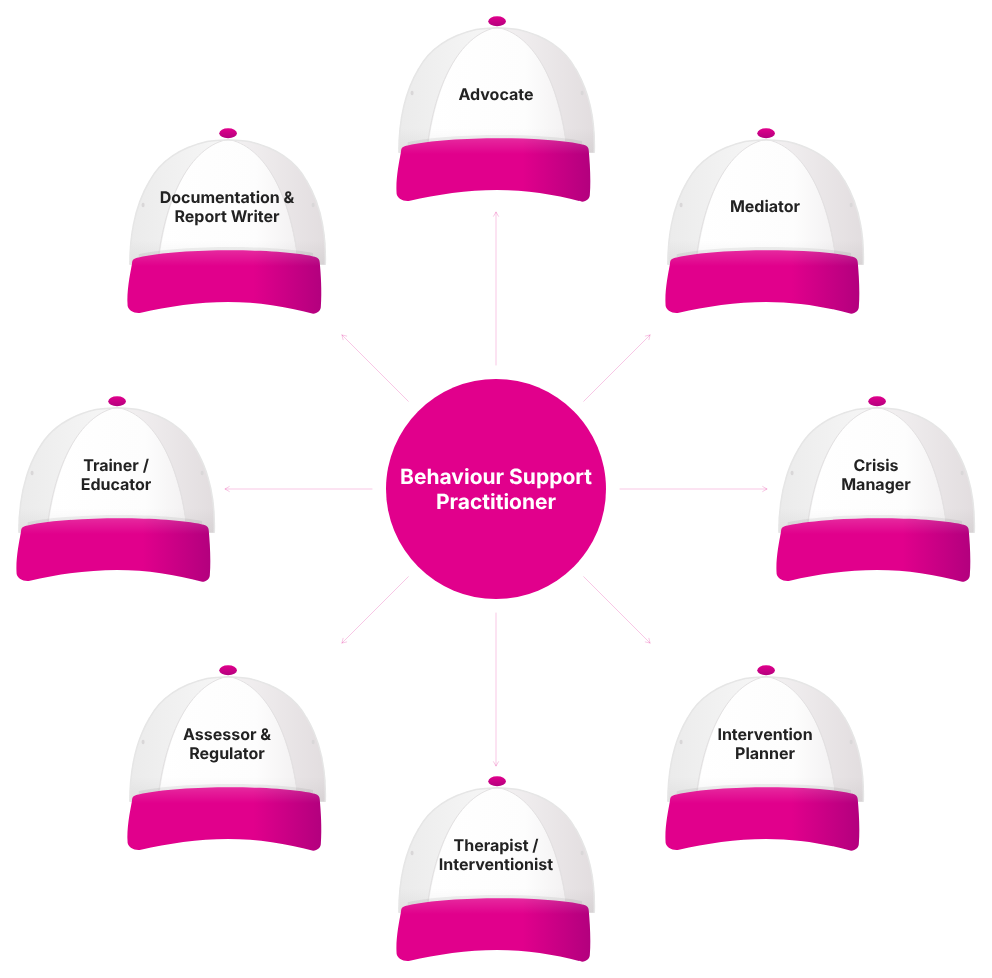
A Behaviour Support Practitioner does far more than write a plan. In any week they may act as assessor, intervention planner, therapist, trainer and educator, consultant, mediator, advocate, crisis manager, report writer, and monitor and evaluator.
Many of these roles are exactly what schools need: someone to explain why a behaviour is happening, train staff in practical strategies, and help families and teachers get on the same page. Learn more in our article, What Does a Behaviour Support Practitioner Do?, which explores how Behaviour Support Practitioners work with children, families and schools to achieve positive outcomes.
Why Schools Are a Key Part of the Support System
Effective Positive Behaviour Support extends beyond understanding the individual. Behaviour is also influenced by the environments, relationships, expectations, supports and opportunities for participation around a child, which is why a systems approach is essential. Schools, families, disability supports and allied health professionals all play an important role in identifying and adjusting these factors to create positive, consistent and sustainable outcomes.
The child sits at the centre, connected to their Behaviour Support Practitioner and to the NDIS, disability support services, health and allied health services, community and social networks, the justice and legal system, and the education system and early intervention.
For school-aged children, the education system is one of the most important parts of that picture. When schools and Behaviour Support Practitioners work together, that can include:
- Sharing an understanding of why behaviours of concern are happening
- Using consistent strategies at home and at school
- Training and supporting school staff to put strategies into practice
- Monitoring progress together and adjusting what isn’t working
Why Collaboration Matters
Students, families and schools all want the same thing: a child who feels safe, included and able to learn. Behaviour support works best when everyone shares responsibility for getting there. The goal is not simply to reduce behaviours of concern, but to improve quality of life, participation and engagement. By working together, schools, families and practitioners can reduce harm, strengthen supportive environments, keep children connected to school, and increase the positive experiences and opportunities every child deserves.
About the CareChoice Behaviour Support Team
CareChoice’s Positive Behaviour Support team works with children, adolescents and adults who are displaying behaviours of concern, helping them achieve improved quality of life, greater independence and meaningful participation in everyday activities.
Our NDIS-registered Behaviour Support Practitioners take a person-centred, evidence-based approach to understanding the reasons behind behaviours of concern and developing practical strategies that support positive outcomes. We work closely with participants, families, schools, support workers and allied health professionals to build skills, increase opportunities and help people achieve their individual goals.
Our Positive Behaviour Support services include Functional Behaviour Assessments, the development and review of Behaviour Support Plans, ongoing monitoring and evaluation of strategies, and coaching and training for families, carers, support workers and other key stakeholders.
We are committed to reducing and eliminating the use of restrictive practices wherever possible through proactive and positive support strategies that promote safety, dignity and choice. By building the capability of the people around a participant and strengthening their support network, we help create sustainable, long-term outcomes across home, school and community environments.
In addition to our NDIS-registered Behaviour Support Practitioners, CareChoice also has psychologists who can provide therapeutic and psychological supports to help participants work towards their NDIS goals.
Learn more about our Positive Behaviour Support services.
Supporting Every Child to Thrive at School
Behaviours of concern don’t have to define a child’s school experience. With a shared understanding and a consistent, positive approach, schools, families and Behaviour Support Practitioners can help every child feel safe, included and ready to learn.