
Person-Centred Active Support: Doing With, Not For
At CareChoice, we believe a meaningful life is built through participation, choice and connection. Person-Centred Active Support (PCAS) is one of the key approaches we use to help people build independence, develop skills and have greater control over their everyday lives.
For many people with disability, opportunities to participate in daily activities can unintentionally be reduced when others step in and do tasks for them. While often well-intentioned, this can limit opportunities to build skills, confidence, independence and choice.
Person-Centred Active Support takes a different approach. It focuses on supporting people to actively participate in everyday life in ways that are meaningful to them, regardless of their support needs or ability.
What Is Person-Centred Active Support?
Person-Centred Active Support is a practical, evidence-informed approach commonly used within disability services, particularly in Supported Independent Living (SIL).
The goal is simple: ensure people with disability are actively engaged in meaningful activities and social connections throughout the day.
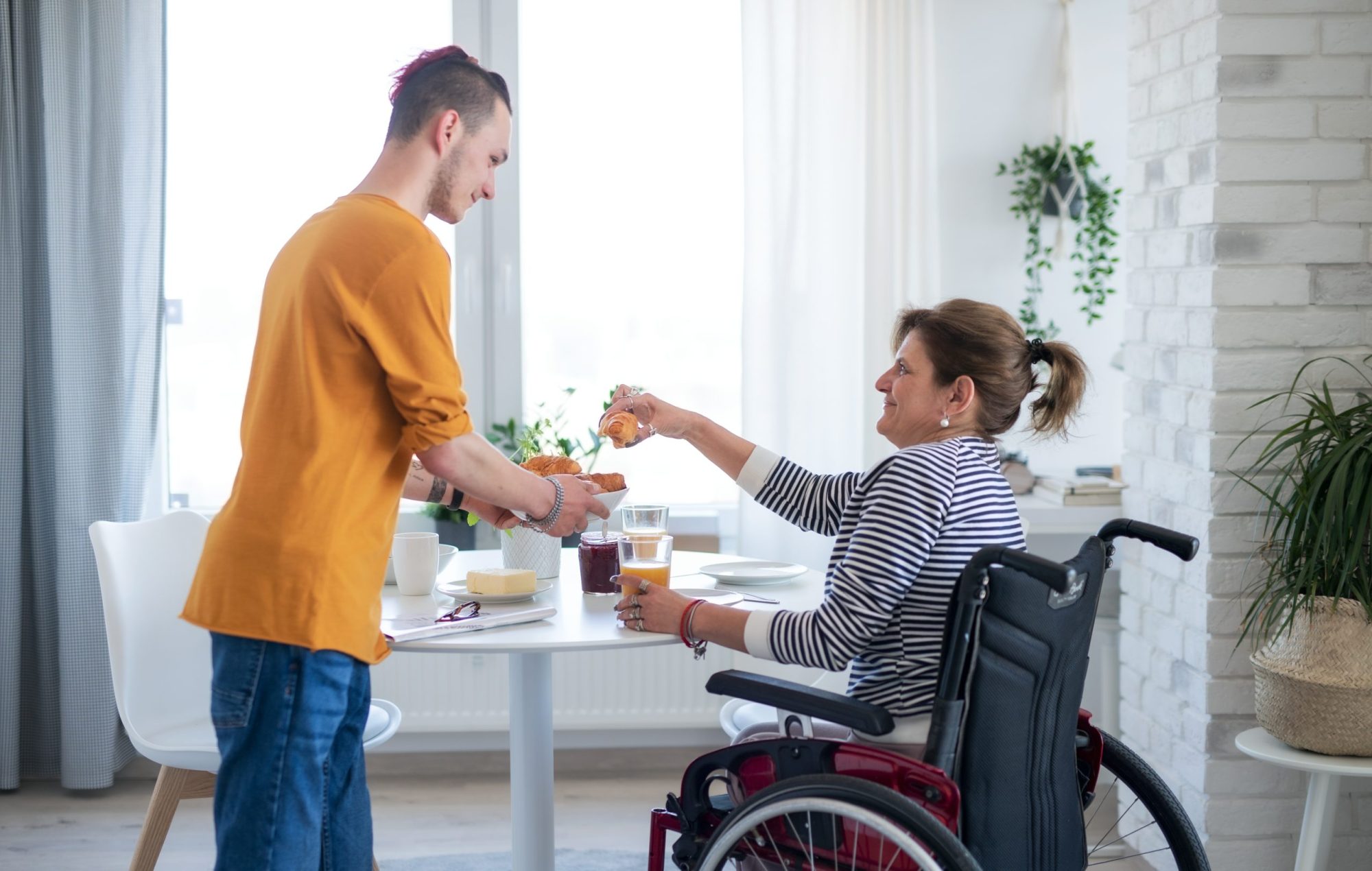
Rather than completing tasks on behalf of someone, support workers look for opportunities to do things alongside them. This approach helps people develop skills, exercise choice, build confidence and maintain greater independence.
At its core, PCAS recognises that every person has the right to contribute, participate and be involved in their own life.
The Four Essentials of Active Support
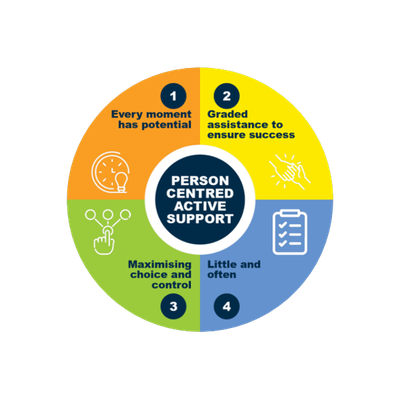
Person-Centred Active Support is built around four key principles that create opportunities for participation every day.
- Every moment has potential. Even small, everyday tasks are a chance to take part. Instead of making breakfast for someone, a support worker might invite them to choose what to eat, stir the bowl or set the table.
- Graded assistance. We give just enough help for a person to succeed, without taking over. If someone can stir but can’t hold the bowl steady, their support worker holds the bowl while they stir.
- Little and often. Frequent, short moments of involvement build skills and confidence better than long, occasional activities. Folding one towel a few times a day can mean more than a big laundry session once a week.
- Maximising choice and control. People are offered real choices about their day, however small: what to wear, what to do and who to spend time with. For people who don’t use words, we offer choices using pictures, objects or gestures.
How PCAS Supports Positive Behaviour Support
Person-Centred Active Support is grounded in well-established psychological research about what people need to thrive.
Maslow’s Hierarchy of Needs suggests that people require safety, belonging and security before they can focus on personal growth and achieving their potential. While meeting basic needs such as food, shelter and safety is essential, quality of life extends beyond these foundations. People also need opportunities to experience belonging, contribute to their communities, achieve personal goals and participate meaningfully in everyday life. These higher-level experiences play an important role in wellbeing, identity and overall quality of life.
Similarly, Self-Determination Theory identifies three fundamental psychological needs that support wellbeing and motivation:
• Autonomy – feeling in control of our own life
• Competence – feeling effective and capable
• Relatedness – feeling connected to and valued by others
When these needs are met, people are more likely to experience positive wellbeing, engagement and motivation. Research also suggests that behaviours of concern are less likely to occur when people consistently experience opportunities for choice and control, develop skills and confidence, and feel connected and valued within their relationships and communities.
When these needs are not met, particularly in environments where opportunities for choice, participation or connection are limited, wellbeing can be negatively affected.
Many behaviours of concern can be linked to unmet needs, barriers to communication, limited opportunities for meaningful participation, or environmental factors that make it difficult for a person to achieve their goals or have their needs understood. This is why PCAS plays an important role in Positive Behaviour Support. By creating opportunities for choice, participation and meaningful connection every day, support workers can help address many of the underlying factors that contribute to behaviours of concern.
What Is a Capable Environment?
As part of CareChoice’s ongoing commitment to best-practice support, team members participate in training on Person-Centred Active Support and capable environments annually. These sessions explore how these approaches help improve quality of life, promote independence and strengthen Positive Behaviour Support outcomes for clients.
A capable environment goes beyond simply providing care and support.
It is in an environment intentionally designed to help people participate, learn new skills, build independence and experience a sense of belonging. Importantly, a capable environment is not defined by how attractive, modern or well-presented a setting appears. Instead, it is defined by how effectively it supports participation, communication, choice, independence, inclusion and meaningful engagement in everyday life.
Creating capable environments is also an important way to reduce the likelihood of behaviours of concern occurring.
During the training, CareChoice team members used a Capable Environment Assessment Tool to evaluate homes they know well and identify opportunities for improvement.
The assessment focuses on six key areas:
- The physical environment
- The social and interpersonal environment
- Emotional and behavioural support
- Communication and understanding
- Skills building and independence
- Documentation and planning
By reviewing these areas, teams can identify practical changes that support greater participation, wellbeing, inclusion and independence for the people they support.
Supported Independent Living at CareChoice
CareChoice is a registered NDIS provider supporting people of all abilities across Melbourne, Geelong, the Mornington Peninsula, Bendigo, Ballarat and other regions of Victoria.
The principles of Person-Centred Active Support are closely aligned with our Supported Independent Living (SIL) services.
Our SIL supports are tailored to each participant and available to people with SIL funding, regardless of their support needs.
Support may include:
- 24-hour support, including active or inactive overnight support
- Personal care and mobility support
- Medication assistance
- Shopping and meal preparation
- Domestic support
- Therapy support
These everyday moments provide valuable opportunities for participation, skill development and greater independence through Active Support.
Expore CareChoice SIL Supports here.
Positive Behaviour Support
Person-Centred Active Support and capable environments complement the work of our Positive Behaviour Support team, helping people understand the underlying reasons for behaviours of concern while developing meaningful strategies to meet their needs.
Expore CareChoice Positive Behaviour Support Services here.
Supporting Independence Through Everyday Moments
Person-Centred Active Support is about more than completing tasks. It is about recognising the potential in every person and creating opportunities for them to participate, contribute and make choices that matter to them.
For participants and families, this often looks like small everyday moments: being asked rather than directed, having the time and support to do things independently, and having a genuine say in daily life.
Over time, those moments can build confidence, strengthen skills and create a home environment where people feel empowered, valued and supported to live the life they choose.