NDIS Positive Behaviour Support in Melbourne

We look beyond the behaviour to understand what’s behind it.

Practical help for a better everyday.

Our qualified and experienced Positive Behaviour Support practitioners provide person-centred assessments, one-to-one support, in-person coaching and practical training for families and support teams, with a focus on improving everyday quality of life.

Behaviour is telling us something.

Sometimes it’s obvious. Often it takes a lot of curiosity and investigation.

A behaviour might be a response to frustration, communication difficulties, something in the environment, an unmet need or a situation that’s difficult to manage.

Positive Behaviour Support looks beyond what happened to understand why it may be happening.

So rather than starting with: “How do we stop this behaviour?”

We start somewhere more useful: “What might this person be trying to tell us or need?” and how can we support the person to get that need met without them needing to use Behaviours of Concern (BoC)?

Our approach is curiosity first. Strategies second.

Behaviour doesn’t happen in a silo. Neither should the plan for supporting it.

Registered NDIS provider

We are registered to deliver behaviour support services.

Functional Behaviour Assessment (FBA)

A comprehensive assessment where the function of the targeted behaviour/s of concern can be identified with confidence.

Positive Behaviour Strategies and Support Plan

Each client receives a BSP that is unique to them including practical changes and skill-building strategies that reduce behaviours of concern.

Training

We equip families and support teams with the confidence and practical skills to respond consistently, reduce escalation and make everyday support more effective.

Holistic, systems approach

Success depends on collaboration. We work with the client’s support network, advocating, educating, and strengthening the system around them.

Ongoing monitoring and adjustments

We continuously monitor and review the effectiveness of strategies to ensure they are working and adjust our approach as needed.

Why choose CareChoice?

Depth and diversity of our PBS team

Our multi-disciplinary PBS team brings experience across psychology, disability, mental health, education, complex support and forensic settings, giving participants broader expertise for complex and changing needs.

Integrated approach

Your practitioner is backed by the knowledge and experience of our wider PBS team, while working alongside the people in your life including care teams, to provide coordinated, consistent support.

Commitment to curiosity and understanding

We look beyond the behaviour to understand the person, then turn that insight into practical strategies that fit their everyday life.

The right connection

We carefully match each participant with a practitioner based on their needs, preferences and background, helping build the trust and engagement that effective behaviour support depends on.

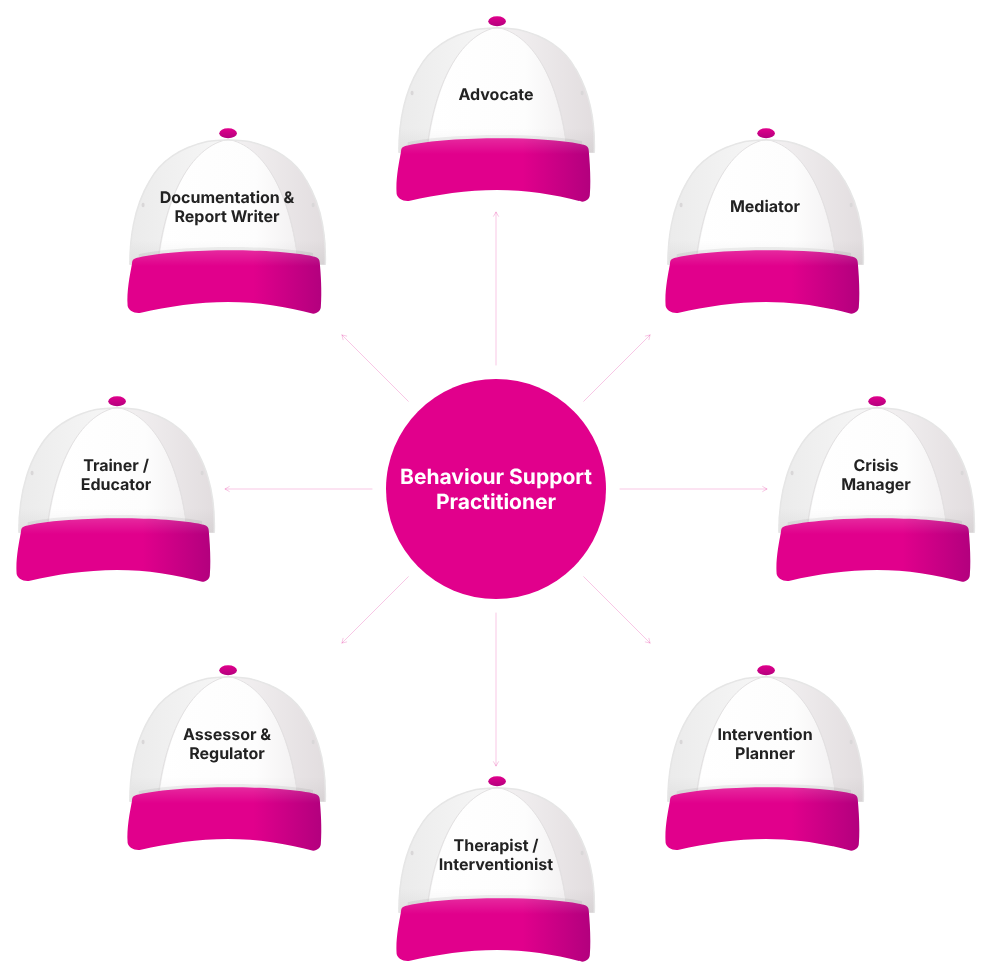
When working with you, our team wear many important hats.

CareChoice helps families and care teams understand the plan and apply strategies consistently in everyday settings. This shared approach can reduce confusion, strengthen skills and make it easier to monitor what is working.

Same person. Same goal. Same approaches.

Who we support.

Our support goes where the person goes. We work across the environments that are most important in their life, including home, school, employment, day programs and community settings. We value understanding the person's experiences, strengths and support needs across their key environments, not just where behaviours of concern may occur.

We support people:

  • Aged between 7 and 65 years
  • Who live in the following areas of Melbourne:
    - Outer Eastern Melbourne: Yarra Ranges Shire, City of Maroondah, Cardinia, and City of Knox
    - Southern and South Eastern Suburbs: Bayside, Casey, Greater Dandenong, Frankston, Glen Eira, Kingston, Monash, and Mornington Peninsula
    - Northern suburbs
  • Have the following funding in their NDIS plans:
    - Behaviour Support (formerly Improved Relationships)
    - Specialist Behavioural Intervention Support
    - Behaviour Management Plan
    - Improved Daily Living
    - Assessment, Recommendation, Therapy or Training – Psychologist
  • In person or online

Meet our team.

Our people bring curiosity, expertise and a commitment to understanding

What our clients say.

From referral to implementation.

Share what you’ve noticed, the support already in place and what you’d like to change. Our intake team will review the person’s needs, location, funding and practitioner availability to find the right match.

Ask about Positive Behaviour Support in your suburb

Your CareChoice Behaviour Support Practitioner takes time to understand the person, their environment and what the behaviour may be communicating. This informs a Functional Behaviour Assessment and practical, person-centred Behaviour Support Plan.

Ask about Positive Behaviour Support in your suburb

We work alongside the person, family members, Support Workers and other key people to build confidence and consistency. Strategies are implemented, monitored and adapted over time to support greater independence, safety and quality of life.

Ask about Positive Behaviour Support in your suburb

FAQs.

Positive Behaviour Support is an evidence-informed approach to understanding why behaviours occur and developing practical strategies that support the person’s needs, skills, independence and quality of life.

Positive Behaviour Support explores the factors influencing behaviour, including communication, the environment, unmet needs and situations that may be difficult to manage. By understanding the purpose a behaviour serves, practitioners can develop strategies that make it easier for the person to have their needs understood and met.

Find out more here.

Positive Behaviour Support can help when behaviours of concern are affecting safety, communication, relationships, learning, community participation or daily routines. Goals may include building communication and coping skills, increasing independence, improving participation, supporting more consistent responses from the people around the person, and reducing the need for restrictive practices.

Positive Behaviour Support may be suitable for NDIS participants whose behaviour is impacting their wellbeing, safety, relationships, participation or everyday life. CareChoice currently supports people aged 7 to 65 who have ‘Behaviour Support’ (or formerly ‘Improved Relationships’) funding in their NDIS plan. Our intake team can review the person’s needs, location and funding to help determine whether the service is appropriate.

An NDIS Behaviour Support Practitioner completes a comprehensive assessment of behaviour concerns to understand their function. This usually involves meeting with the person, observing them in their everyday environments, consulting their support network and collecting relevant information and behaviour data. The findings inform a person-centred Behaviour Support Plan with an emphasis on proactive strategies (what can the care team do to better support the person), and identifying skill teaching opportunities that we can empower the person to use. The practitioner then supports education and implementation, monitors progress and adjusts strategies as needed, with the aim of reducing the frequency or severity of behaviours of concern and, where applicable, reducing and eliminating restrictive practices over time.

A Functional Behaviour Assessment (FBA) is a structured assessment process used to better understand behaviours of concern and the factors influencing them. It involves gathering information from the person, their support network, direct observations, and other relevant sources to identify patterns, triggers, and the outcomes that may be maintaining the behaviour. The purpose of an FBA is to understand what the behaviour may be communicating or what need it is meeting for the person. Rather than focusing solely on the behaviour itself, the assessment explores why the behaviour is occurring and the environmental, social, emotional, sensory, or practical factors that may be contributing to it.

A Behaviour Support Plan (BSP) is a practical, person-centred document that brings together the key information, strategies, and recommendations required to support a person effectively across all environments. It is designed to guide everyone involved in the person's care and support, ensuring a consistent approach that enhances quality of life, promotes skill development, and reduces behaviours of concern.

Find out more here.

Yes. Reducing and, where possible, eliminating restrictive practices is a core objective of Positive Behaviour Support (PBS). By understanding the reasons behind behaviours of concern and implementing proactive, person-centred strategies, many people experience improved outcomes, reduced distress, and a decrease in the frequency and severity of behaviours of concern. As positive behaviour support strategies become effective, the need for restrictive practices may reduce. This can provide evidence that existing restrictions should be reviewed, adjusted, or no longer required.

Absolutely. Collaboration with the person and their support network is an essential part of effective behaviour support. CareChoice works with families, schools, Support Workers, SIL teams and other key people to build a shared understanding of the Behaviour Support Plan and support consistent implementation of strategies across everyday settings. This coordinated approach helps strengthen outcomes for the person and ensures supports remain practical, person-centred and responsive to their goals.

Positive Behaviour Support is generally provided in person so the practitioner can understand the person’s needs and everyday environments. In specific circumstances, our team may offer some remote delivery where it is appropriate and the person can engage effectively, while aiming to meet with them in person where possible.

CareChoice provides Positive Behaviour Support in the Yarra Ranges, Maroondah, Cardinia, Knox, Bayside, Casey, Greater Dandenong, Frankston, Glen Eira, Kingston, Monash, the Mornington Peninsula and Melbourne’s northern suburbs. Availability varies by location and practitioner capacity, so contact our intake team to confirm support in your suburb.

Positive Behaviour Support is funded through the ‘Behaviour Support’ category, which is specifically designed for Behaviour Support Practitioners registered with the NDIS. The relevant line items under ‘Behaviour Support’ are Specialist Behavioural Intervention Support (11_022_0110_7_3) and Behaviour Management Plan, including training in behaviour management strategies (11_023_0110_7_3).

CareChoice has registered psychologists who may be able to provide supports using a participant's ‘Improved Daily Living’ funding through the line item Assessment, Recommendation, Therapy or Training – Psychologist (15_054_0128_1_3), where clinically appropriate and aligned with the participant's plan goals. Our intake team can review available funding and confirm eligibility for these supports.

Participants, families, Support Coordinators, schools and other care team members can contact CareChoice to discuss a referral. A GP referral is not required for NDIS-funded Positive Behaviour Support.

Speak to our intake team on 1300 737 942

Email [email protected]

Make an enquiry here

Yes. Interim Behaviour Support Plans (BSP) may be developed where restrictive practices are in use and an interim plan is required to meet regulatory and reporting obligations while a comprehensive BSP is being completed.

We may also develop an Interim BSP where restrictive practices are not being used, but there is an urgent need for behaviour support. This may occur where there are significant behaviours of concern, emerging risks, or where participants, families and support teams require guidance and practical strategies while a comprehensive assessment is undertaken.

Interim plans provide person-centred, practical recommendations that can be implemented immediately, helping to promote safety, consistency and quality of life while a comprehensive BSP is developed.

If you would like to change providers, simply let us know. We will work with you to support a smooth transition and can provide documentation, including a progress summary of work completed to date, to assist with handover to your new provider where appropriate.

While both services aim to improve a person's quality of life, they have different focuses. Positive Behaviour Support (PBS) seeks to understand the purpose or function of behaviours and uses person-centred, environmental and skill-building strategies to reduce behaviours of concern and promote meaningful outcomes. Psychology focuses on mental health, emotional wellbeing, coping strategies and therapeutic support.

These services often complement one another, and some individuals may benefit from both behaviour support and psychological therapy at the same time. The focus of PBS is on behaviour, environments and quality of life, while psychology focuses on thoughts, emotions and mental wellbeing.

Yes. CareChoice supports participants with a broad range of complex needs and circumstances. Our practitioners are experienced in working alongside our clients, families and support teams to navigate complexity and achieve meaningful outcomes. Where restrictive practices are in use, we focus on understanding their purpose, developing proactive and person-centred alternatives, and supporting their reduction and, where possible, elimination over time through evidence-based Positive Behaviour Support strategies.

We provide support beyond assessment and written plans. Our practitioners work alongside clients, families and support teams to implement strategies in everyday settings, build skills and confidence, monitor progress and make adjustments as needed. Supporting implementation is an important part of our approach, as it helps ensure strategies are practical, effective and lead to meaningful outcomes for the person and those supporting them.

Latest news in Positive Behaviour Support.

The NDIS

Person-Centred Active Support: Doing With, Not For

At CareChoice, we believe a meaningful life is built through participation, choice and connection. Person-Centred Active Support (PCAS) is one of the key approaches we use to help people build independence, develop skills and have greater control over their everyday lives. For many people with disability, opportunities to participate in daily activities can unintentionally be

Read more
Positive Behaviour Support

Looking After Yourself Isn’t Putting Your Child Second

A Guide for Parents and Primary Caregivers of Neurodiverse Children By Andrew Buchanan, Psychologist & Senior Behaviour Support Practitioner Parents and primary caregivers of neurodiverse children often spend much of their time focused on the needs of others. Appointments, school meetings, therapies, advocacy, daily routines, and unexpected challenges can push personal wellbeing down the list.

Read more
Positive Behaviour Support

What Does a Behaviour Support Practitioner Do?

The Many Hats of a Behaviour Support Practitioner Positive Behaviour Support is a collaborative approach. Lasting outcomes are built when the person, family, support staff, therapists and service providers work together to understand needs, strengthen quality of life and create meaningful opportunities for participation, choice and autonomy. Positive Behaviour Support (PBS) can make a significant

Read more

You don’t need to have the behaviour figured out.

Tell us what’s happening, what you’ve noticed and what support is already around the person.

Our team can talk through whether Positive Behaviour Support may be appropriate and what happens next.

Andrew

Psychologist/Senior Behaviour Support Practitioner

Endorsement at Advanced level as Behaviour Support Practitioner, having provided behaviour support services since 2016 Member of both the Australian Psychological Society (APS) and Behaviour Support Practitioner Australia (BSPA) Postgraduate Diploma in Psychology

Andrew is an experienced psychologist with over 13 years of expertise in providing psychological and behavioural support to individuals with disabilities, often including complex support needs.

Andrew is passionate about working in behaviour support and thrives on the opportunity to mentor his team in relation to achieving meaningful outcomes for the individuals they support.

Sebastian

Behaviour Support Practitioner

Bachelor of Law – Universidad Libre de Colombia Diploma of Community Services Certificate IV in Disability Certificate III in Individual Support Graduate Certificate in Mental Health (currently completing) – Australian Catholic University Mental Health First Aid Training

Sebastian is a Behaviour Support Practitioner with experience across the mental health, forensic and complex disability sectors. He has over five years’ experience working as a mental health support worker, followed by a further three years working in leadership roles supporting individuals with forensic involvement and complex support needs.

His work focuses on supporting behavioural complexity, managing risk and promoting safe, person-centred outcomes within structured and highly regulated environments.

Based in Melbourne’s northern suburbs, Sebastian brings a calm and considered approach to behaviour support practice. He has experience coordinating complex cases that involve restrictive practices, supervision requirements and collaboration across multidisciplinary teams.

Sebastian works closely with participants, families, support workers, clinicians and external stakeholders to support consistent, ethical and effective service delivery.

Sebastian holds a Bachelor of Law from Universidad Libre de Colombia, along with qualifications in community services and disability. He is currently completing a Graduate Certificate in Mental Health at Australian Catholic University.

His legal, operational and practice-based background supports a strong understanding of governance, compliance and ethical decision-making within the NDIS Quality and Safeguards Framework.

Having worked extensively on the front line as a support worker, Sebastian understands the realities of day-to-day support delivery. This experience informs his approach to behaviour support planning, ensuring strategies are practical, achievable and aligned with the capacity of support teams.

His experience working in operational and leadership contexts also gives him a solid understanding of plan implementation, supporting staff practice and maintaining consistency across services.

As a Positive Behaviour Support Practitioner, Sebastian uses a person-centred and strengths-based approach, with a strong focus on advocacy and participant voice.

He values working collaboratively with families, allied health professionals and other relevant stakeholders to build shared understanding and support meaningful progress.

Sebastian is committed to ethical practice, reflective learning, and providing respectful, reliable support to individuals navigating complex systems, particularly within the forensic NDIS space.

Behaviour support for complex and forensic needs, restrictive practices, mental health and disability support, case coordination, risk management, multidisciplinary collaboration, plan implementation and support worker guidance.


Talha

Behaviour Support Practitioner

Bachelor of Psychological Science (currently undertaking) Certificate IV in Disability

Talha is a Behaviour Support Practitioner based in Southeast Melbourne, Victoria, with extensive frontline experience across disability, mental health, and acute clinical settings. He holds a Certificate IV in Disability and is currently undertaking a Bachelor of Psychological Science to further strengthen his understanding of human behaviour, development, and evidence-based practice.

Talha brings a strong foundation in supporting individuals with complex needs, psychosocial disabilities, and behaviours of concern. Through his experience as a disability support worker, he has worked closely alongside Behaviour Support Practitioners and multidisciplinary teams to implement Behaviour Support Plans in a consistent, person-centred, and outcomes-focused manner.

In addition to his disability experience, Talha has worked within acute hospital environments in a psychiatric security and clinical support capacity. In this role, he functioned as part of a multidisciplinary team, contributing to the safety and wellbeing of patients and staff within high-acuity settings. His work emphasised proactive engagement, therapeutic communication, and early intervention to prevent escalation.

Supporting individuals presenting with acute mental health needs, including psychosis and complex behaviours of concern, Talha developed strong capabilities in dynamic risk assessment, crisis prevention, and safe, non-punitive de-escalation. His approach prioritised communication, rapport-building, and least-restrictive responses, ensuring that interventions were respectful, proportionate, and aligned with clinical direction.

Importantly, his experience in these high-pressure environments has shaped a practice approach centred on maintaining dignity, reducing restrictive practices, and responding to behaviours with empathy and professionalism. He consistently prioritises understanding the underlying function of behaviour over reactive or control-based responses.

Talha is highly motivated by supporting NDIS participants to achieve meaningful goals and improve their quality of life. He is committed to delivering supports that are respectful, ethical, and aligned with positive behaviour support frameworks.

His practice is grounded in a person-centred approach, recognising that behaviour serves as a form of communication linked to unmet needs. Talha works collaboratively with participants, families, and support networks to develop practical strategies that build capability, promote independence, and create supportive environments. He places a strong emphasis on proactive supports, skill development, and reducing the need for restrictive interventions.

Talha’s areas of expertise:

  • Supporting individuals with complex needs and psychosocial disabilities
  • Implementation of Behaviour Support Plans within multidisciplinary teams
  • Therapeutic communication and rapport-building in high-pressure settings
  • Proactive risk assessment and crisis prevention
  • Safe, non-restrictive de-escalation of behaviours of concern
  • Supporting individuals experiencing acute mental health presentations
  • Collaborative practice with clinical and medical teams
  • Promoting person-centred, strength-based, and capability-building approaches

Derek

Behaviour Support Practitioner

Certificate IV in Mental health - Holmesglen TAFE Certificate IV Alcohol and Drugs – Holmesglen TAFE Certificate IV in Disability – Warner Institute Ability to connect and build rapport with clients, families and care teams Strong understanding of complex support needs, with a consistent emphasis on person-centred, ethical approaches and meaningful client outcomes

With over a decade of experience in the disability sector, Derek has a strong background in supporting individuals with diverse needs. Starting as a Disability Support Worker and then a Disability Residential Coordinator, Derek gained valuable skills in care coordination and team leadership.

Derek has a keen interest in mental health related behaviours – particularly in cases involving co-occurring conditions or psychosocial disability.

Dan

Behaviour Support Practitioner

Certificate III in Disability Professional experience across diverse settings, including supported accommodation, the prison system, and collaborative work with Victoria Youth Justice.

Dan is a Behaviour Support Practitioner with extensive hands-on experience in the disability sector, working primarily with young people presenting with complex behaviours and mental health challenges. His strength as a practitioner is building trust and rapport with individuals who have experienced trauma or disengagement, particularly teens navigating behavioural and emotional regulation difficulties.

Living on the Mornington Peninsula, Dan brings a grounded, community-focused approach to his work.

This varied background has equipped him with a strong understanding of risk, resilience, and the importance of person-centred, trauma-informed support.

Outside of work, Dan is passionate about the outdoors — he spends time surfing, mountain bike riding, and fishing. These interests not only recharge him personally but also influence his values of balance, well-being, and connection, which he brings into his professional practice.

Dan is deeply committed to the disability industry, with a particular passion for mental health advocacy and supporting positive, sustainable change in the lives of the people he works with.

Annemarie

Behaviour Support Practitioner

Certificate III in Disability (United Kingdom) – NHS Identifying restrictive practices and quality of life implications for her clients. Systems approach to behaviour support, where she effectively involves, collaborates, and builds a clients care team to achieve behaviour support outcomes.

With over 20 years of experience in the disability sector, beginning in the UK, Annemarie has worked across a wide range of areas including intellectual disability, complex behaviours of concern, and mental health. Her career has progressed from direct Support Worker to Team Leader and Residential Coordinator, providing her with a deep, hands-on understanding of individual needs and support environments.

As a Behaviour Support Practitioner at CareChoice, Annemarie is passionate about developing tailored, strengths-based strategies that promote positive behaviour change. Her approach is grounded in empowering individuals to achieve their goals, while upholding their right to choice, control, and a meaningful life. She is committed to recognising and nurturing each person's potential, and supporting them to live with dignity, independence, and purpose.

Belinda

Behaviour Support Practitioner

Bachelor of Education - RMIT Certificate IV in Residential and Community Services, specialising in Intellectual Disabilities Certified in Applied Behaviour Analysis Levels 1, 2 & 3 Trained in All About Me Hannen Communication Program Deep understanding of the NDIS framework, including Change of Circumstances requests, Disability Support Pension (DSP) applications, crisis advocacy, and appeals processes

Dedicated and passionate Behaviour Support Practitioner with over 30 years’ experience in the disability sector. As a Behaviour Support Practitioner at CareChoice, Belinda brings a diverse background across roles including Support Worker, Case Manager, Special Education Teacher, Day Program Manager, Residential House Supervisor, Disability Employment Consultant, and DES Business Development Consultant.

Belinda is known for her person-centred approach, with a strong focus on:

  • Building rapport with participants and families
  • Collaborative teamwork with allied health professionals and support staff
  • Developing creative tools and visual resources for emotional regulation and communication
  • Empowering families to feel confident in implementing support strategies


Belinda prides herself on being flexible, adaptable, and outcome-focused in her support delivery.

Audrey

Behaviour Support Practitioner

Certificate IV in Youth Work Mental Health First Aid training.

Audrey is a Behaviour Support Practitioner at CareChoice who has significant experience in the disability sector, specifically hands-on experience as a support worker in the complex behaviour space, in both group and one-to-one settings. This frontline experience has given her invaluable insight into the realities of daily support and a deep understanding of how Positive Behaviour Support (PBS) can empower individuals to live safer, more meaningful lives.

Audrey holds a Certificate IV in Youth Work and has completed Mental Health First Aid training. Her background has shaped her strong belief that everyone deserves the opportunity to participate in enriching, engaging, and fulfilling activities—whether in their own home or as part of their community.

Audrey is particularly passionate about supporting teenagers and young adults to build confidence and work toward their personal goals. She achieves this by collaborating closely with families, allied health professionals, and support networks to develop strategies that are individualised, strength-based, and person-centred.

Audrey’s approach is open, transparent, and focused on maintaining ongoing, genuine involvement in each client’s support journey. Audrey prides herself on being flexible and adaptable — recognising that Positive Behaviour Support is not a one-size-fits-all model but a dynamic and evolving process.

Audrey’s service areas are - Outer and Inner Southeastern suburbs of Melbourne.

Her background has shaped her strong belief that everyone deserves the opportunity to participate in enriching, engaging, and fulfilling activities - whether in their own home or as part of their community.

Audrey is particularly passionate about supporting teenagers and young adults to build confidence and work toward their personal goals. She achieves this by collaborating closely with families, allied health professionals, and support networks to develop strategies that are individualised, strength-based, and person-centred.

Audrey’s approach is open, transparent, and focused on maintaining ongoing, genuine involvement in each client’s support journey. Audrey prides herself on being flexible and adaptable — recognising that Positive Behaviour Support is not a one-size-fits-all model but a dynamic and evolving process.