
What Does a Behaviour Support Practitioner Do?

The Many Hats of a Behaviour Support Practitioner
Positive Behaviour Support is a collaborative approach. Lasting outcomes are built when the person, family, support staff, therapists and service providers work together to understand needs, strengthen quality of life and create meaningful opportunities for participation, choice and autonomy.
Positive Behaviour Support (PBS) can make a significant difference for people whose behaviours of concern are affecting their safety, wellbeing and quality of life. An NDIS Behaviour Support Practitioner providing Specialist Behaviour Support works alongside the person and their support network to understand their needs, communication and environment. Together, they develop strategies that build skills, increase choice and autonomy, support meaningful engagement and participation, improve quality of life, reduce risk and minimise restrictive practices.
Andrew Buchanan, Psychologist and Senior Behaviour Support Practitioner at CareChoice, shares what the role really involves, the systems that need to work together, and the common barriers that can stand in the way of positive outcomes.

What Does a Behaviour Support Practitioner Do?
A Behaviour Support Practitioner works collaboratively with people experiencing behaviours of concern and those who support them. The role is to understand the person’s needs, communication, strengths and environmental fit, then develop practical, person-centred strategies that improve quality of life, participation, choice, autonomy and meaningful engagement, while increasing independence and reducing restrictive practices wherever possible.
Positive outcomes are rarely achieved by a practitioner working in isolation. Behaviour Support Practitioners partner with participants, families, support workers, therapists, allied health professionals and service providers to combine their knowledge, identify the factors influencing behaviour and agree on supports that are practical, respectful and consistent across everyday settings.
What Is a Behaviour of Concern?
A behaviour of concern is any behaviour, whether active or passive, that:
- Gets in the way of a person taking part in and contributing to their community
- Directly or indirectly undermines their rights, dignity or quality of life
- Puts the health and safety of the person, or the people they live and work with, at risk
This understanding comes from McVilly and colleagues (2002), and it underpins positive behaviour support practice in Australia.
Why Behaviour Support Is Often Urgent
When behaviours of concern are causing harm, the effects can reach well beyond the person themselves. Harm can include:
- A significant risk of injury, or even death, for the person
- Emotional and psychological harm
- A life with fewer opportunities, for example through restrictive practices that affect quality of life
- Difficulty keeping consistent support workers
- Burnout for parents and primary carers
- Legal, justice and ethical consequences
This is how harm often turns into behaviour support. Significant harm creates urgency, urgency creates a need for solutions, and that brings pressure and expectation to resolve things quickly.
A Behaviour Support Practitioner has to respond to that pressure while still taking the time to understand the person properly.
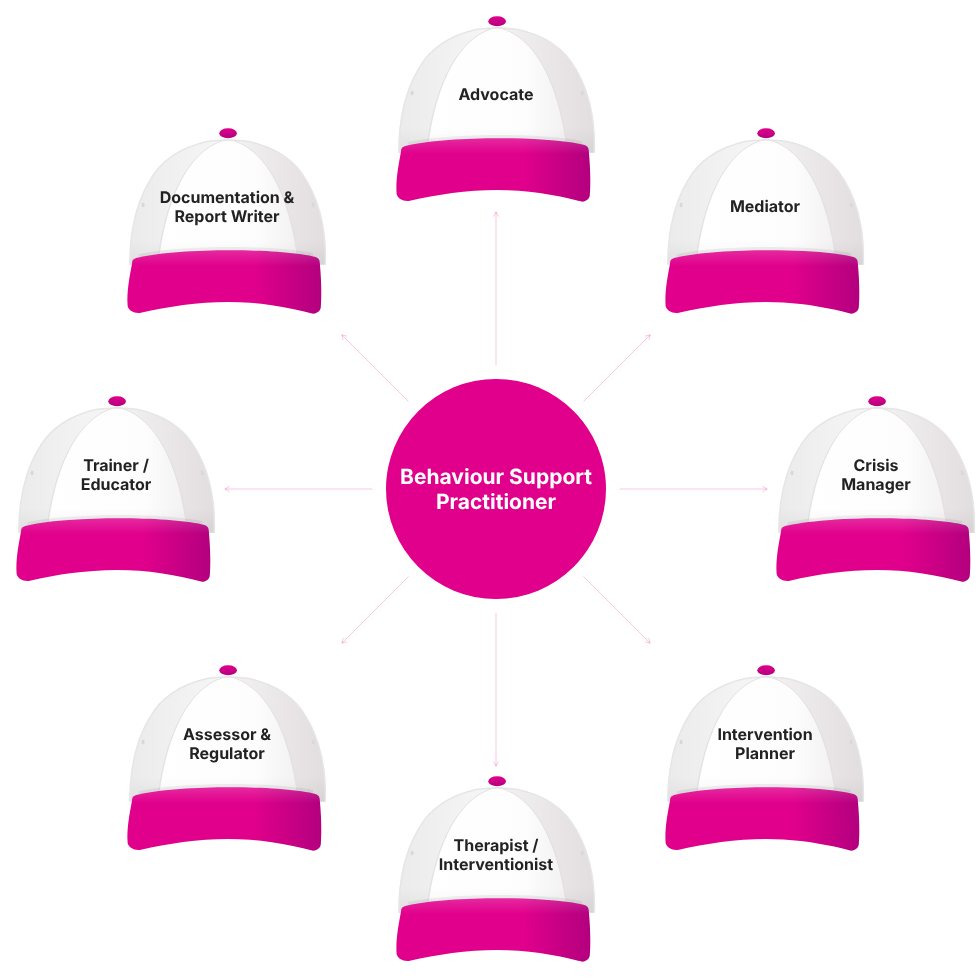
The Many Hats of a Behaviour Support Practitioner
To be effective and holistic, a Behaviour Support Practitioner takes on many roles, often at the same time:
- Assessor and regulator – understanding why behaviours of concern happen and working within NDIS requirements
- Intervention planner – designing strategies tailored to the person
- Therapist and interventionist – working directly with the person
- Trainer and educator – helping families and support teams put strategies into practice
- Documentation and report writer – preparing assessments, plans and reports
- Monitor and evaluator – checking what’s working and adjusting the approach
- Crisis manager – responding when situations escalate
- Mediator – helping people with different views find common ground
- Consultant – offering expert advice to the people and services involved
- Advocate – standing up for the person’s rights, dignity and quality of life
Behaviour Support Is a Team Effort
Positive Behaviour Support is most effective when everyone involved in a person’s life works together towards shared goals. While Behaviour Support Practitioners play an important role, achieving positive outcomes requires collaboration across a participant’s entire support network.
Behaviour Support Practitioners regularly work alongside participants, families, direct support workers, Support Coordinators and allied health professionals, including Occupational Therapists and Speech Pathologists. Each person brings valuable insight into the participant’s strengths, needs, goals and day-to-day experiences.
By sharing knowledge, maintaining consistent approaches and working towards common outcomes, support teams can create environments that promote skill development, increase independence and improve quality of life. This collaborative approach also helps ensure behaviour support strategies are practical, sustainable and implemented consistently across different settings.
When everyone is working together, Positive Behaviour Support becomes more than a plan on paper. It becomes a coordinated effort to help participants achieve meaningful and lasting outcomes.
Common Barriers to Positive Outcomes
Even a well-designed behaviour support plan can fall short when the people around the person do not yet have the shared understanding, resources or confidence needed to apply it consistently. Two common implementation challenges are:
- Unclear roles and responsibilities. Not everyone involved understands what behaviour support involves or what their part in it is.
- Implementation support and capacity. Staff and carers may need additional coaching, training, resources, time or confidence to apply strategies consistently in day-to-day situations.
How We Work to Overcome Them
Our approach focuses on building the understanding, skills, resources and confidence needed to turn a plan into consistent everyday support:
- Education from the start. Initial and ongoing education makes sure everyone’s expectations are aligned, and explains why a shared approach is needed.
- Rapport and support for carers. We take time to understand where families and support workers are at and what they need. The person needs them involved, or their behaviour support needs will remain unmet.
- A thorough assessment. A good assessment is inclusive and shows a confident understanding of the person and their behaviours of concern, with a clear, informed approach to supporting them.
- Building buy-in. Explaining the reasons behind a behaviour isn’t always enough. Short trials of strategies (“let’s try this and see”) help people see what works, and early success encourages everyone to get on board.
Positive Behaviour Support at CareChoice
CareChoice is a registered NDIS behaviour support provider. Our Positive Behaviour Support service includes:
- Functional Behaviour Assessment to identify the function of a behaviour of concern
- Positive behaviour strategies, including environmental strategies and skill-teaching opportunities
- A person-centred Behaviour Support Plan for each client, with a focus on reducing restrictive practices over time
- A holistic, systems approach, working with and strengthening the person’s support network
- Ongoing monitoring and review to make sure strategies are working
Our services align with the NDIS Positive Behaviour Support Capability Framework. We support people aged 7 to 65 in Melbourne’s outer east, south and south-east, and depending on suitability, behaviour support can also be delivered via tele-practice.
Better Outcomes Through Shared Responsibility
Behaviour support is most effective when everyone involved understands their role and works together. PBS is not simply about reducing behaviours of concern; it seeks to understand what a person may be communicating, how well their environment meets their needs, and what will support a better quality of life. When the person, their family, support workers, therapists and service providers share responsibility, support can create greater choice, autonomy, participation and meaningful engagement—and help the person live a safer, fuller life with dignity.